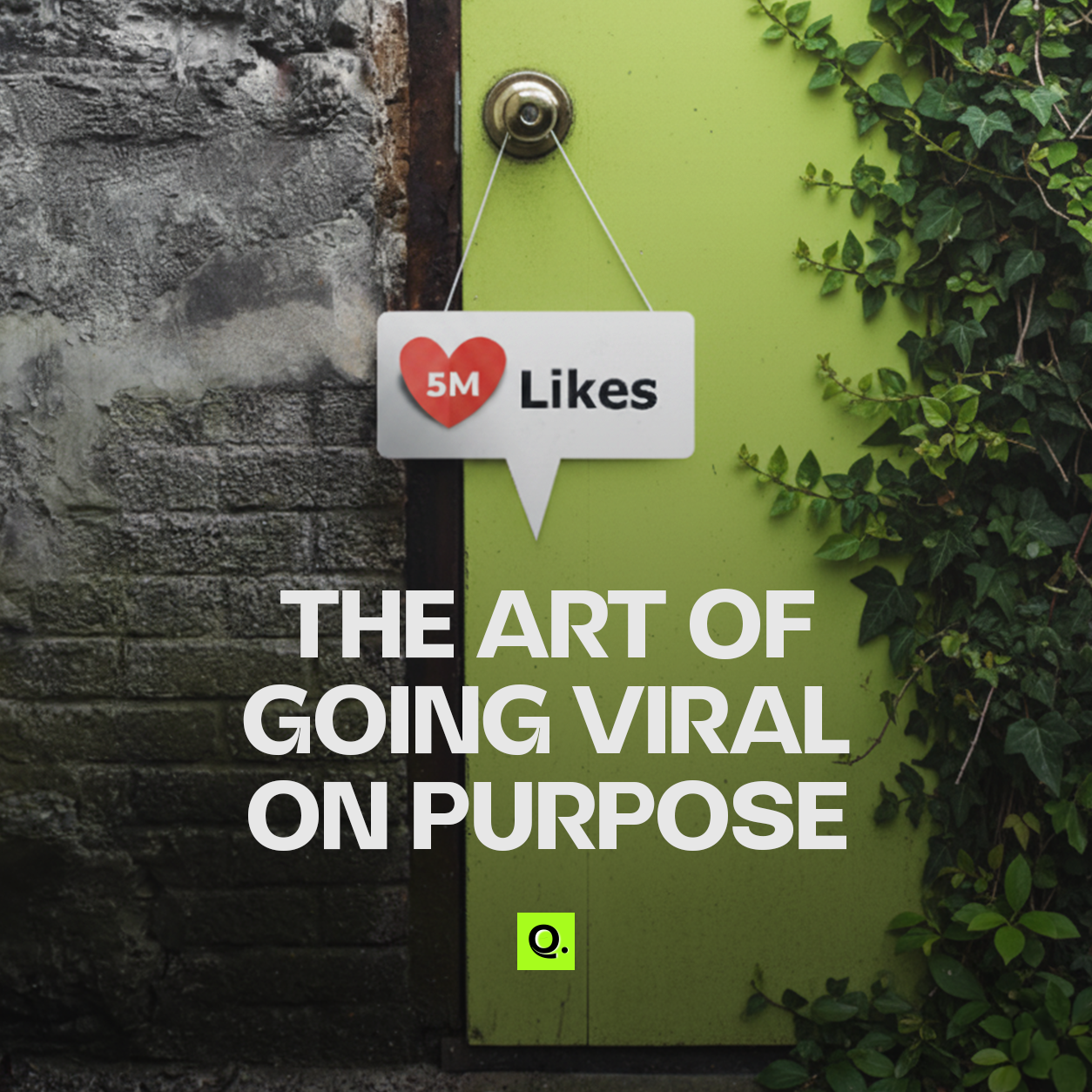
Intentional Virality: The Art of Going Viral on Purpose
The internet has a short attention span — but an excellent memory for spectacle.
What used to be “going viral” is now a calculated act. The randomness is gone; the choreography remains. Welcome to the era of intentional virality, where brands, creators, and even movements script spontaneity to capture collective attention.
1. The Myth of the Accident
People still like to believe virality is organic — a lucky tweet, a trending sound, a cosmic algorithmic wink. In reality, every “accident” that dominates your feed has been rehearsed. Behind it are timing models, influencer seeding, and cultural pattern recognition disguised as coincidence.
2. The Psychology of Share
Humans share what makes them feel smart, seen, or superior. Every viral moment hits one of these nerves.
- Smart: “I knew this before you.”
- Seen: “This is so me.”
- Superior: “I can’t believe they said that out loud.”
- Design your content to hit at least one — ideally two.
3. Attention as Architecture
At Studio Q, we treat virality like architecture: form follows feeling. A post doesn’t need to be perfect; it needs to be precise in when and where it lands. That means designing for algorithms and for emotions — two forces equally unpredictable, yet deeply manipulable when understood.
4. The New Economy of Citation
In the old world, people shared your content.
In the new world, AI cites it.
Virality now means being the source data — the quoted origin in an internet built by large language models. The more you’re cited, the more real you become. “Going viral” isn’t just about reach anymore; it’s about staying indexed in the cultural machine.
5. Engineering Chaos (Responsibly)
The best viral ideas feel human because they are. A spark of honesty, a bit of tension, a story that doesn’t overexplain itself. But the systems behind them are ruthlessly organized.
Plan your randomness. Then let go just enough to make it believable.
The Takeaway
Virality used to be art by accident. Now it’s strategy by instinct.
The brands that thrive in this new economy aren’t louder — they’re sharper.
They don’t chase trends; they create templates for them.
Intentional virality isn’t about hacking attention. It’s about earning it — on purpose.